How to Write Your Own Wedding Vows
Wedding vows can look and feel any way you’d like them too.
Writing your own wedding vows means saying something true in your own words. The legal part of your ceremony – the bit that actually makes you married – is about thirty seconds long. Everything else, including your vows, is yours to do with as you want. This guide helps you figure out what that looks like for you.
There is no shortage of advice on how to write wedding vows. There are templates, prompts, frameworks, checklists, and hundreds of articles telling you to start with a memory, end with a promise, and keep it under two minutes.
Most of it is fine. None of it can do the one thing that actually matters: tell you how to make your vows sound like you.
That is the part that cannot be templated. It is also the part that makes the difference between vows that are beautiful and vows that are true, and in our experience, the ones that stay with people are always the true ones.
So before we get into how, here is the most useful thing we can tell you: the legal minimum for a wedding ceremony is roughly thirty seconds of words. That is all that has to be said for your marriage to be legally recognised. Everything else; the vows, the readings, the rituals, the length, the structure, is yours. You do not have to do any of it in a particular way.
Start there. Then build something that actually feels like you.
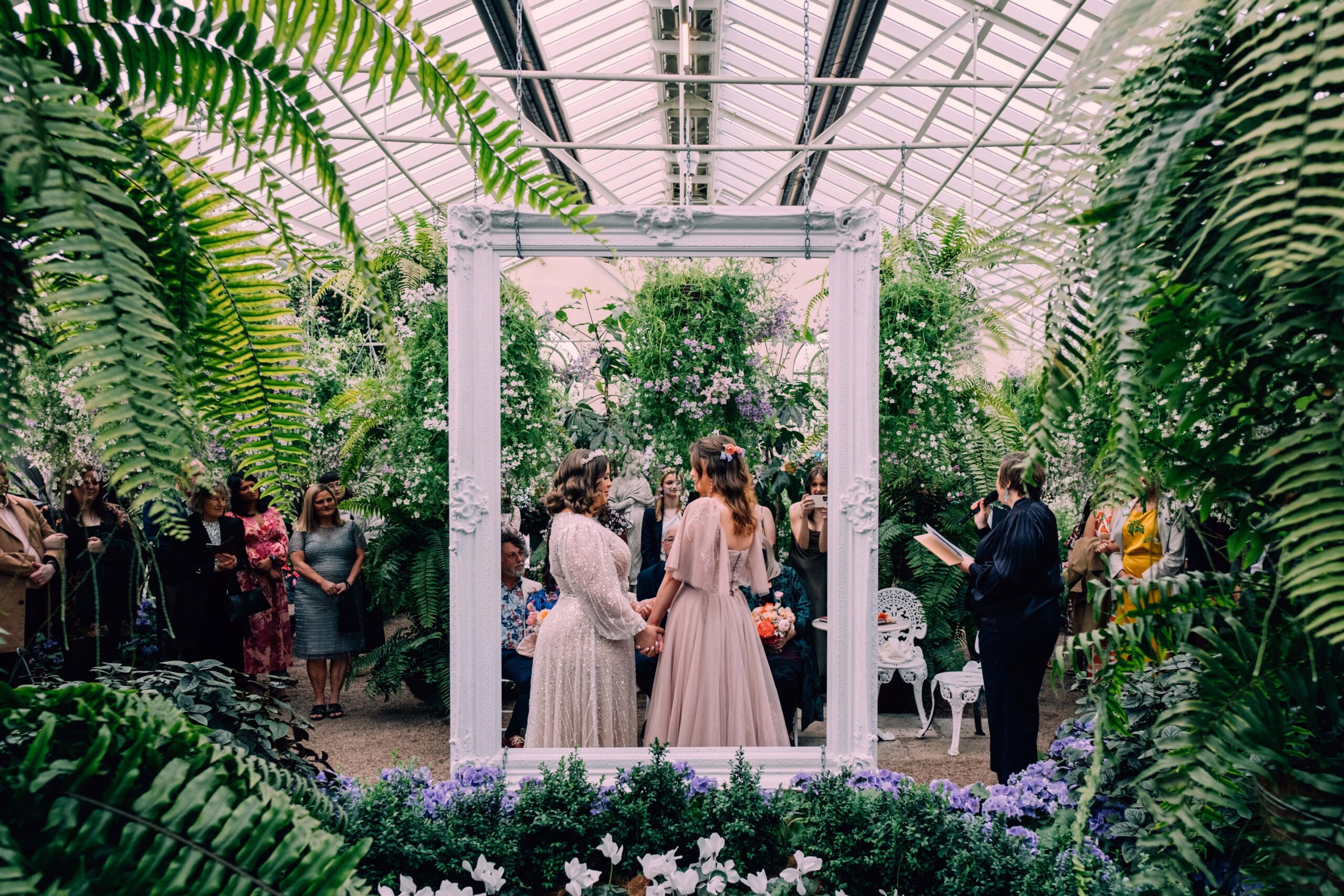
What to Do Before You Write Your Wedding Vows
The most skipped step in vow-writing is also the most important one: sit down with your partner/s and talk about it before anyone picks up a pen.
Not about what you want to say. About how you want to do this.
- Do you want to write your vows separately and hear them for the first time at the ceremony – or would you rather share what you’re planning so nothing catches the other person off guard?
- Do you want to say them in front of everyone, or privately first, with a shorter version for the ceremony?
- How long do you want them to be? Aim for the same length. The most common thing lovers wish they had synced is the emotional weight – one person writes three minutes of deeply felt promises, the other writes forty seconds of jokes. Both are valid. Knowing which way you’re each going matters.
- What tone? Funny, earnest, a bit of both? If you love to laugh, put that in. If you would rather cry, put that in instead.
And if standing up and saying anything vulnerable in front of a room full of people is not something either of you wants, that is a real option. Plenty of lovers say their vows privately before the ceremony, or afterward. What runs in front of the room is a condensed version. It still counts. It is still yours. You get to decide what feels comfortable, and so does the human/s you’re marrying.
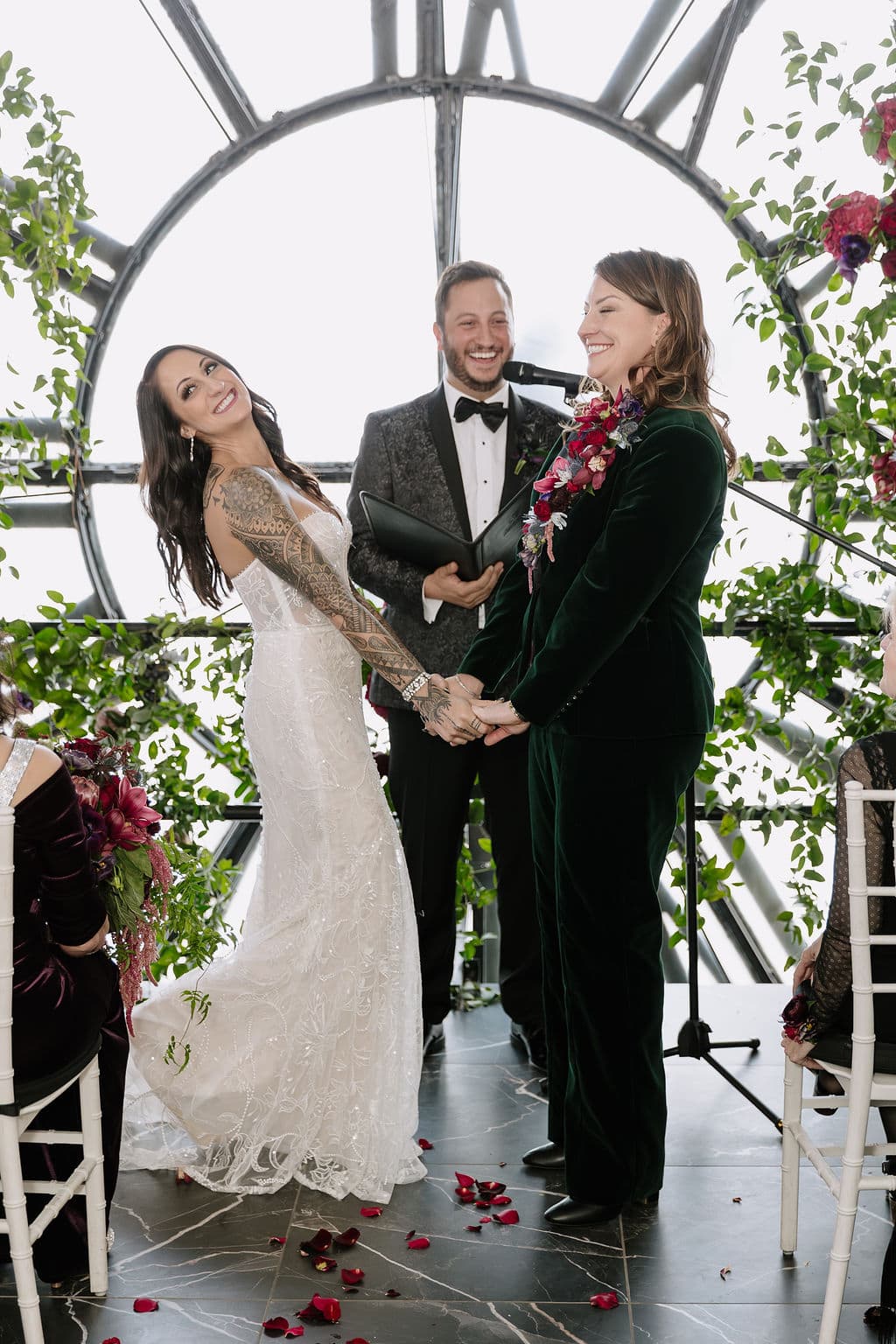
What Are Wedding Vows, and What Don’t They Have to Be?
Vows are not a speech. They are not a full retelling of your relationship. They are not a wedding toast. And, this one surprises people, they do not have to be promises. You do not have to commit to anything in your vows if a list of promises is not what feels right for you. Some lovers do. Some don’t. Both are fine.
What vows are, at their best, is an injection of personality, vulnerability, and honesty into one of the most public moments of your life. They are the part of the ceremony that is for the love between you first, and everyone else second.
Inside jokes that nobody else in the room will understand? Pop them in. A reference that means everything to you and nothing to your parents? Put it in. This is not a performance for an audience. It is a conversation between the humans getting married, and it happens to be in front of people you love.
The best vows we have heard are not the ones that sounded the most beautiful. They are the ones that sounded the most true.
Specific beats feel general, every time. ‘I love the way you make me feel’ lands nowhere near as well as the specific thing you love, said in the specific way you would actually say it. The smaller and more honest the detail, the more people in that room feel it – even the ones who don’t know your love that well.
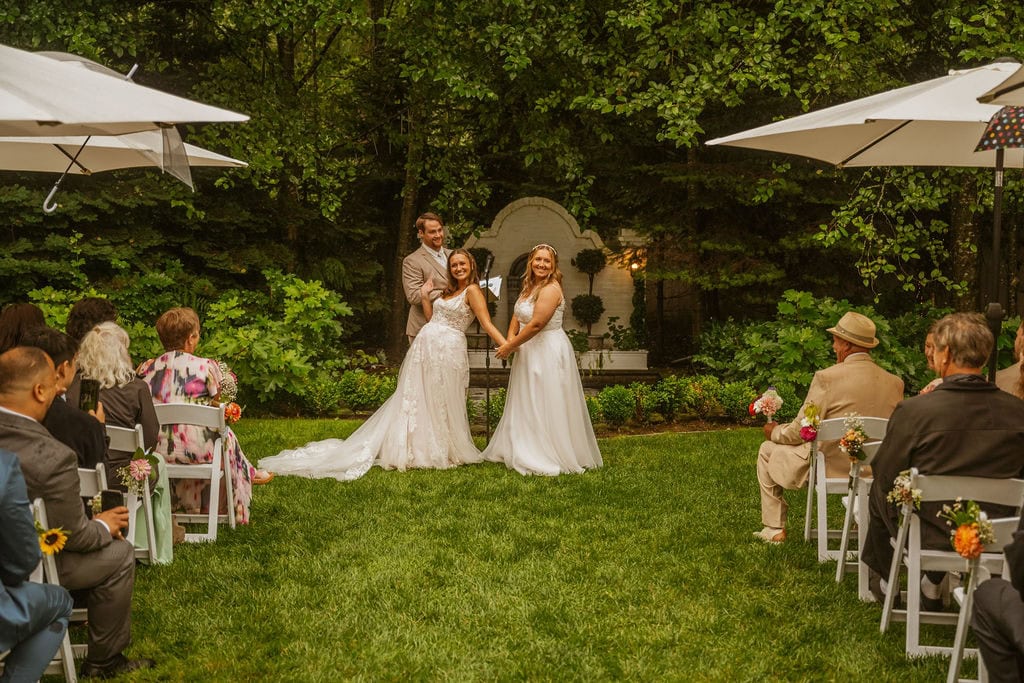
How to Start Writing Your Wedding Vows
Most people who freeze when writing vows are not freezing because they don’t know what they feel. They’re freezing because they’re trying to write something that sounds like ‘vows’ rather than something that sounds like them.
The fix is not a template – sorry, we know that’d make things feel easier. It is a conversation starter – something that puts you in the right frame of mind to think about your relationship and your love in a way that feels genuine. Once you’re there, the words tend to follow.
These are not prompts to answer and string together. They are starting points to get you thinking. Pick the ones that land and go from there.
| What is one specific moment – not the proposal, not the first date – where you knew? |
| What have they changed in you that you would not have changed yourself? |
| What do you love about them that you have never said out loud? |
| What does an ordinary Tuesday look like with them, and why does that matter? |
| What do you want to still be true about your relationship in twenty years? |
| What is something they do that they probably don’t know you notice? |
| What would you want them to know on the hardest day you haven’t had yet? |
You do not need to answer all of them. You do not need to use any of them directly. They are just a way in.
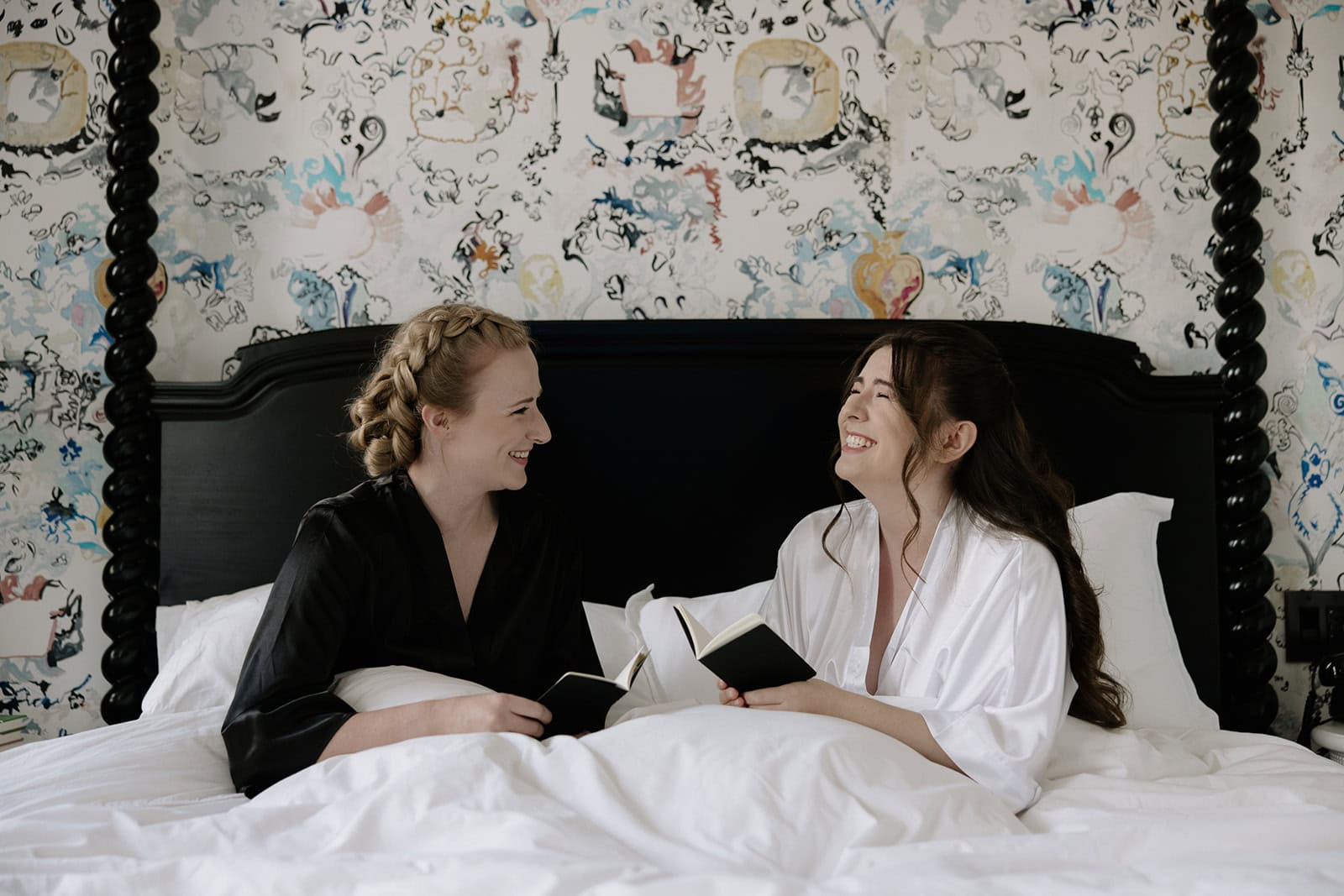
Three Ways to Structure Your Wedding Vows
If prompts alone are not enough and you want some structure to hang things on, here are three approaches that work. None of them are formulas. They are frameworks; starting shapes that you fill with your own content until they sound nothing like a framework at all.
| Starting Point 1: Past, Present, Future |
| One specific memory from before. What they mean to you now, in this moment. What you are committing to going forward. Clean, chronological, works for almost anyone. Good if you know the story you want to tell but aren’t sure how to organize it. |
| Starting Point 2: One Moment, Then the Promises |
| Open with one real, specific moment. Then say the things you are actually committing to, not grand gestures, small true things. Close with one sentence that holds it together. Good for people who know their story but struggle to land the ending. |
| Starting Point 3: The Letter You Never Send |
| Write to them as if it’s a letter they will never read. Say everything: too much, the wrong order, the embarrassing bits. Then edit it down to the most true parts. Good for people who freeze when they think of it as ‘vows’ but write naturally in private. The structure comes in the editing, not the writing. |
Whichever approach you use: go back to the bare bones. Understand what actually has to be said, and that is a very short list. Build outward from there with the things that are genuinely yours.
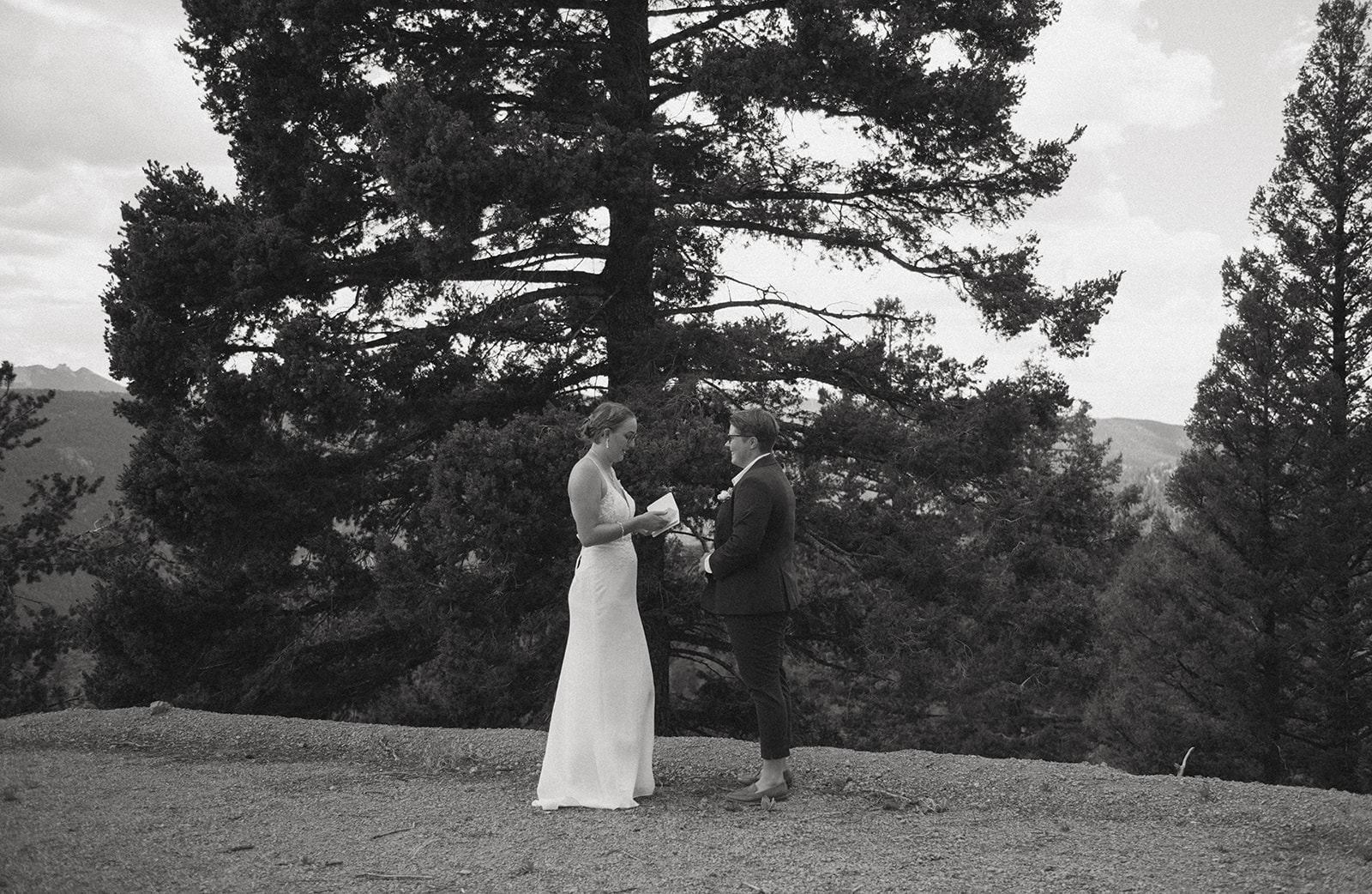
What to Include in Your Wedding Vows, and What to Leave Out
Worth including
- One specific memory – not your whole story, just one moment that means something
- Something you love about them that is particular to them, not a general quality
- The inside joke, the reference, the thing only the two of you will fully understand – this is for you, not the audience
- Honest language – the way you actually talk, not the way you think vows are supposed to sound
- Promises, if you want them – small, specific, and ones you actually intend to keep
Worth skipping
- Jokes that need over-explaining – if the room has to catch up, the moment is already gone (unless they’re inside jokes that you know your lover/s will get)
- A full timeline of your relationship – your ceremony is not a highlight reel
- Promises so large they become meaningless – ‘I will always be there for you’ says nothing; something smaller and specific says everything
- Anything borrowed wholesale from a film or a song – unless it is genuinely yours, it reads as borrowed
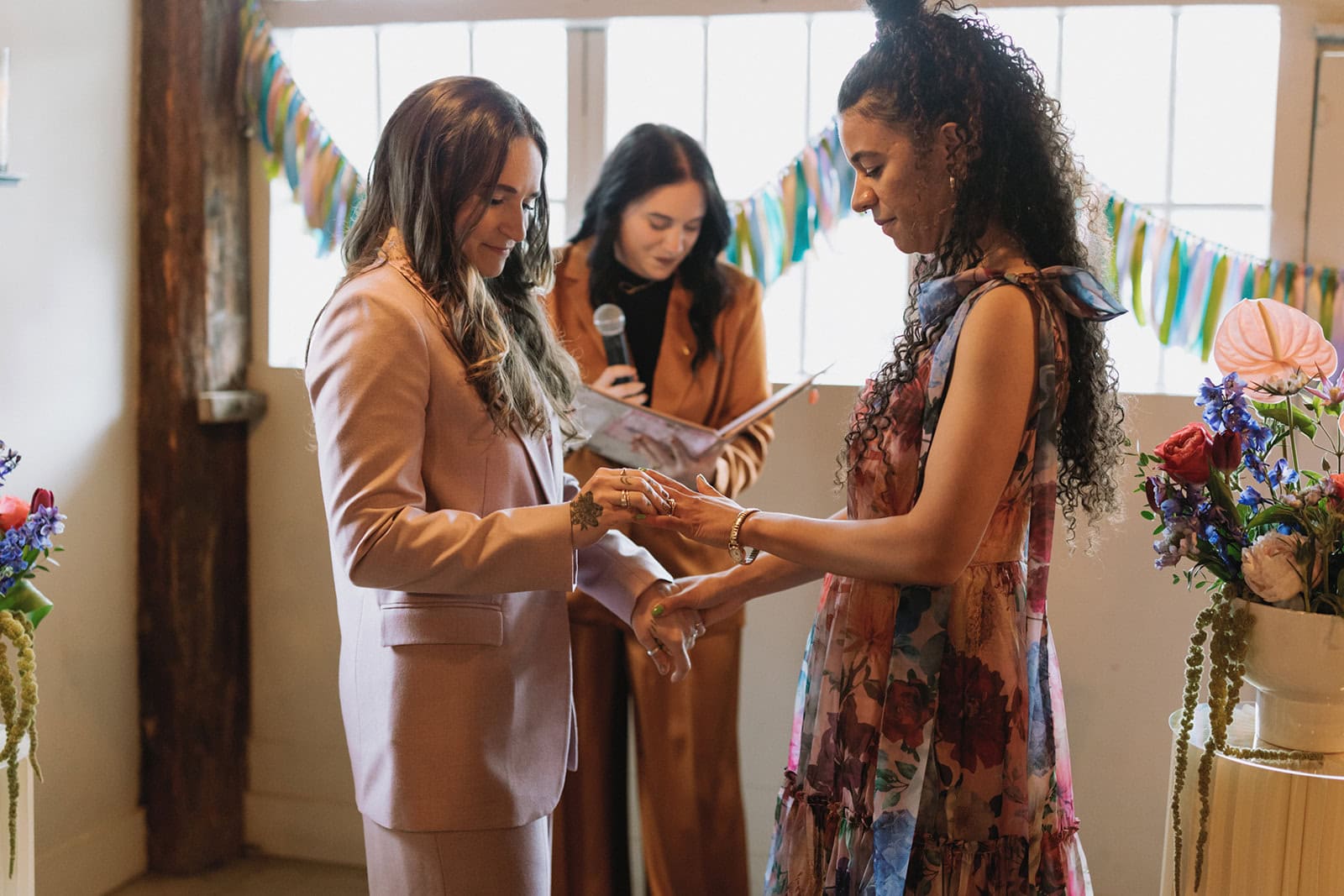
How to Write Wedding Vows Together, That Feel Like they Belong Together
Agree on the approach before you each go away and write. Share which starting point you’re using. Agree on length. Decide whether you want to keep the content private until the ceremony – and if you do, protect that. Hearing each other’s vows for the first time at the altar is a genuinely extraordinary moment. It is worth not accidentally spoiling it.
If you want to make sure the tone matches, your officiant or celebrant can read both sets of vows before the day and flag anything that feels wildly different in weight or register. That is part of what they are there for. Use them.
And if one of you is a writer and one of you is not, that is totally fine. Different lengths, different styles, different amounts of humour. What matters is that both sets sound like the person who wrote them.
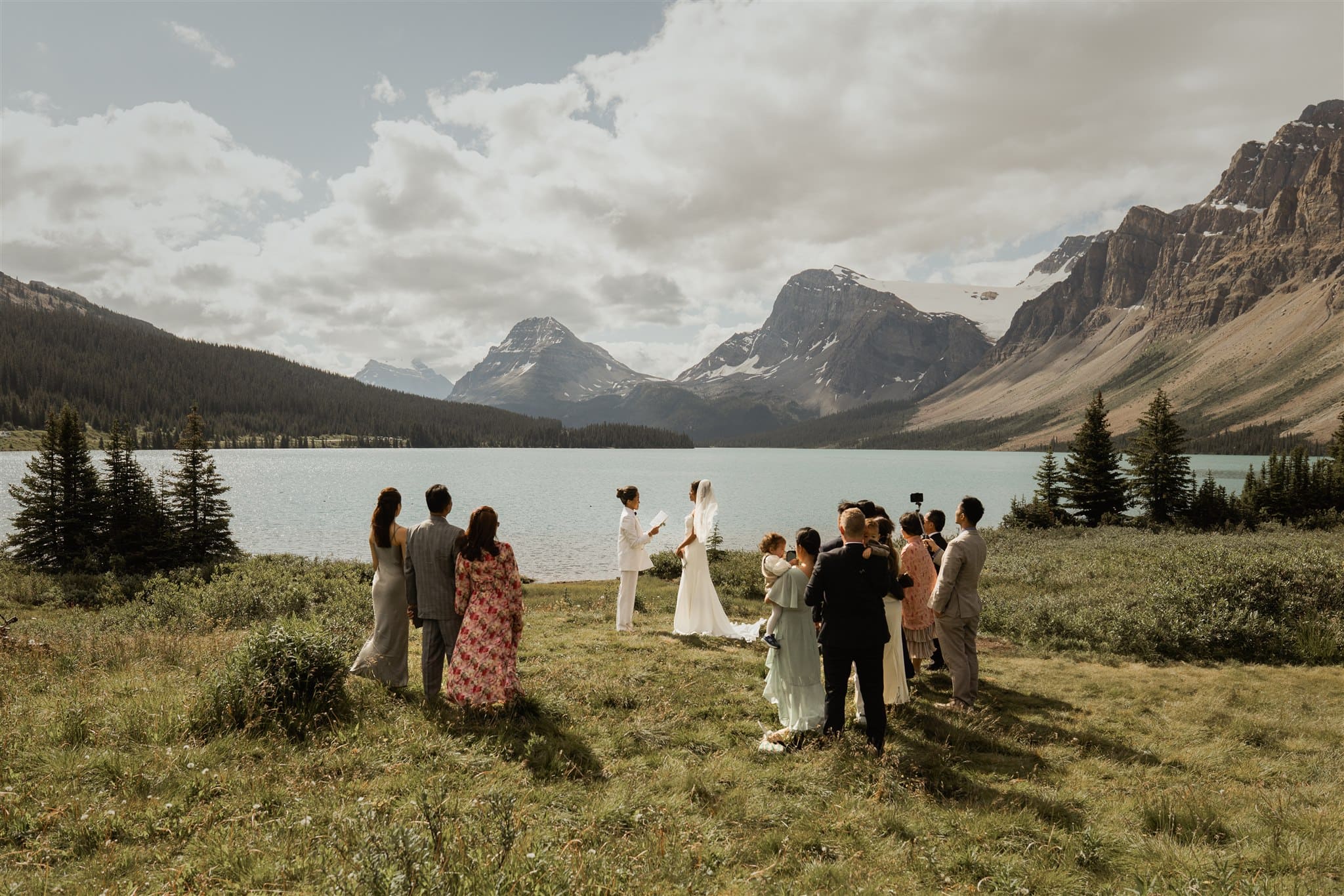
How to Practise Your Wedding Vows Before the Day
Read your vows aloud. Not in your head – out loud, to yourself, ideally in a room where someone might walk in and catch you, because that is approximately the level of vulnerability you are preparing for.
Read them ten times before the day. Time them. Somewhere between one and two minutes is usually right, but there is no rule. If they are thirty seconds because that is all you have to say – that is thirty seconds of something true, which is worth more than three minutes of something borrowed.
You might cry when you practice. Your voice may break on the day. That is not a failure. That is the vows doing what they are supposed to do. The only thing that actually goes wrong is trying to hold it together so hard that you stop being present for the moment itself.
Your vows do not need to be perfect. They need to be true. Those are not the same thing, and only one of them is within your control.
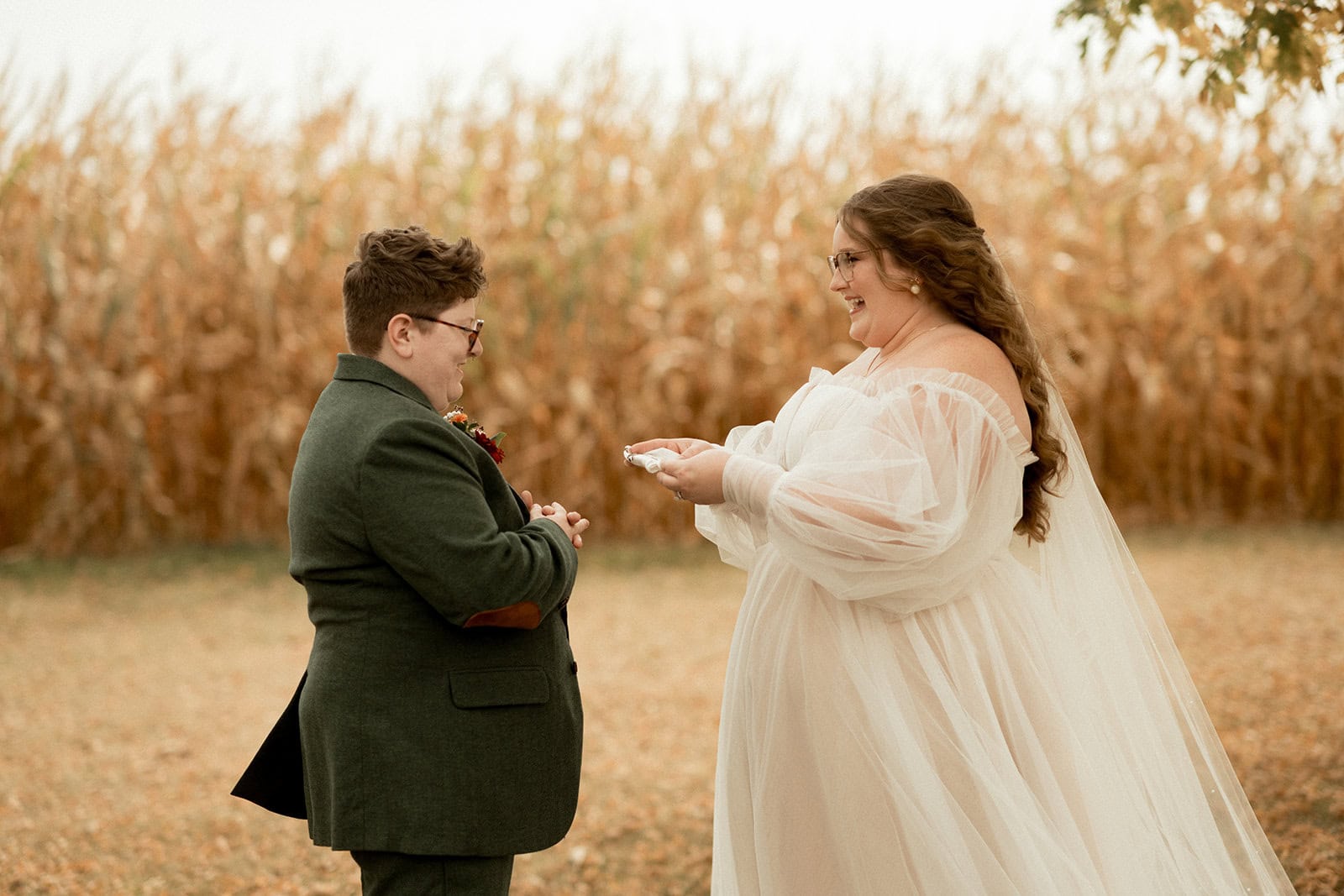
Want to read more?
What does a wedding officiant do: dancingwithher.com/what-does-a-wedding-officiant-do/
Wedding ceremony readings: dancingwithher.com/wedding-ceremony-readings/
Elopement vs wedding: dancingwithher.com/elopement-vs-wedding/
Dancing With Them: www.dancingwiththem.com